Ensemble learning is a machine learning paradigm that follows the simple yet powerful principle: “Wisdom of the Crowd” or we can say “Two heads are better than one.”
It is a powerful machine learning algorithm that combines the predictions of multiple machine learning models by mitigating the errors or biases that may exist in individual models by leveraging the collective intelligence of multiple models that leads to a more precise prediction.
Just as a committee of experts often makes better decisions than a single expert, ensemble learning combines multiple machine learning models to produce better predictions than any single model could achieve alone.
Origins and Evolution
The concept emerged in the late 1970s but gained significant momentum in the 1990s with two breakthrough developments:
- 1996: Leo Breiman introduced Bootstrap Aggregating (Bagging)
- 2001: Jerome Friedman developed Gradient Boosting
These innovations laid the groundwork for modern algorithms like Random Forests and XGBoost that dominate today’s machine learning landscape.
Core Types of Ensemble Learning
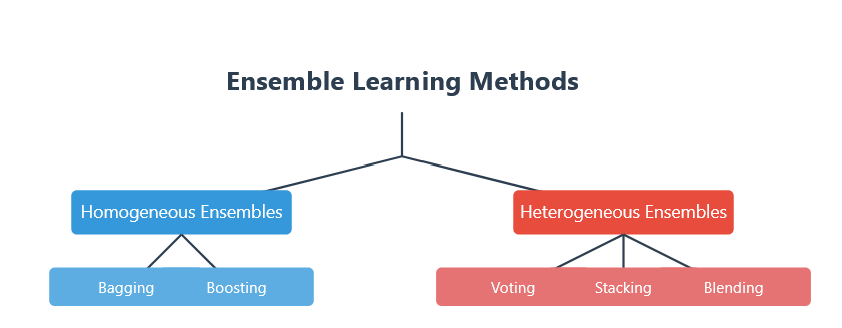
Homogeneous Ensembles
- Uses multiple versions of the same algorithm
- Main approaches:
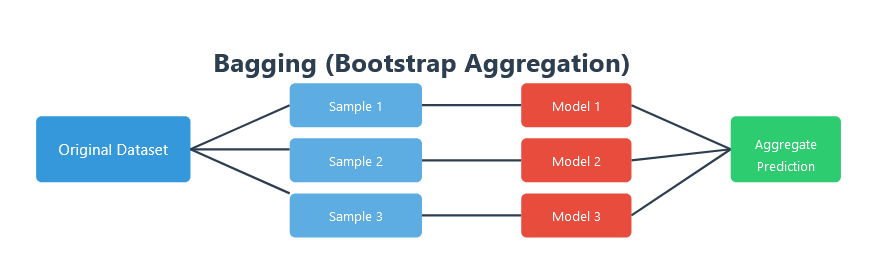
Bagging: Creates multiple training datasets through random sampling
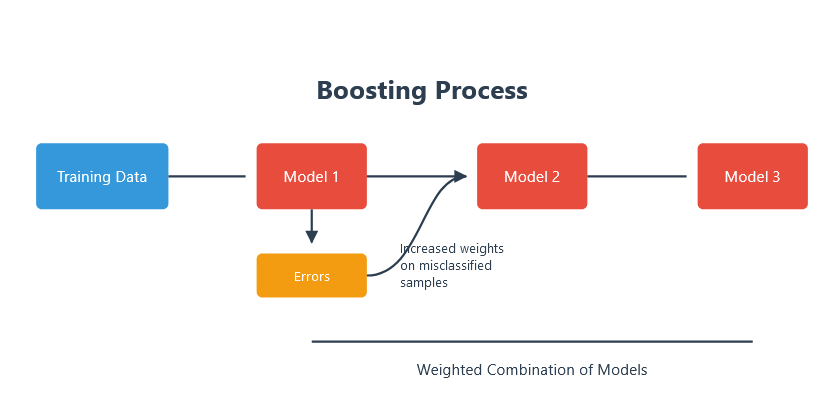
Boosting: Builds strong models by focusing on mistakes of previous models
Heterogeneous Ensembles
- Combines different types of algorithms
- Key methods:
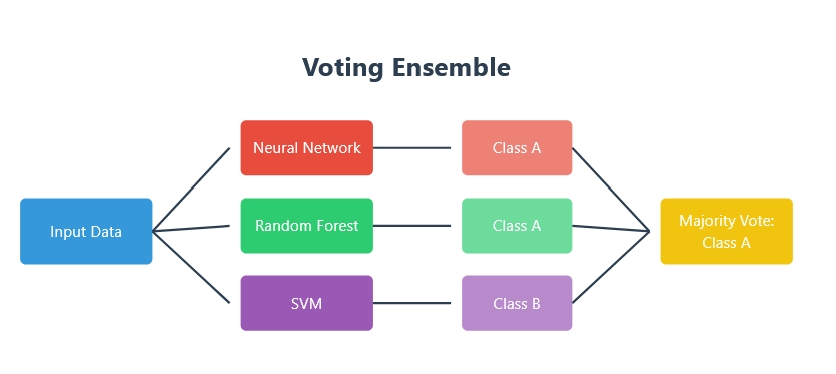
Voting: Models vote on the final prediction
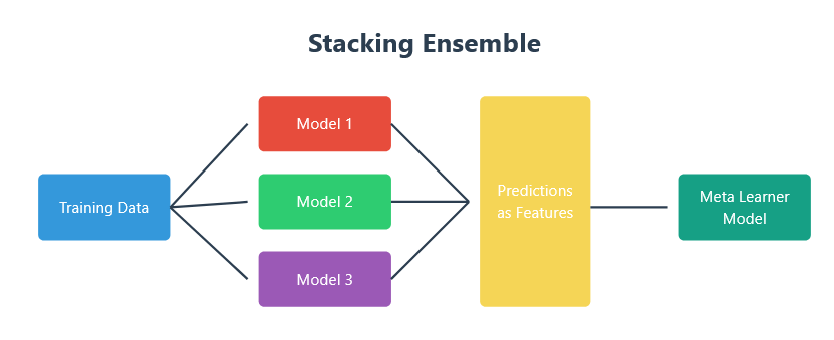
Stacking: Uses a meta-model to combine predictions
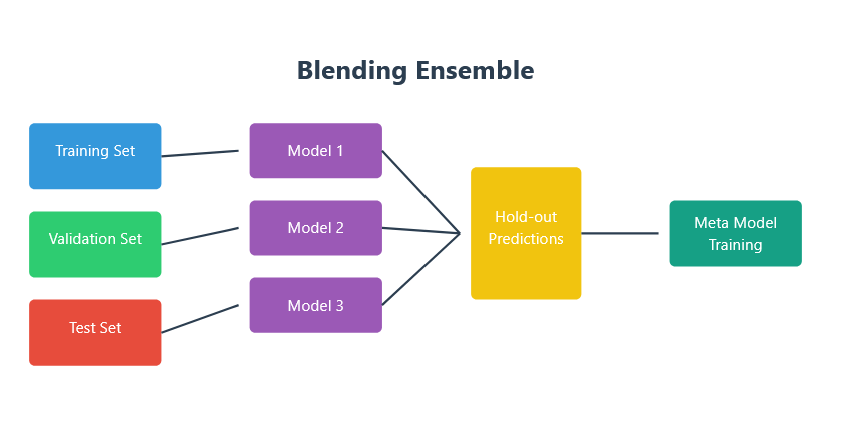
Blending: Similar to stacking but uses a separate validation set
Popular Use Case in Financial Services
Risk Management
Credit Risk Assessment
Combines multiple models to evaluate loan applications Reduces false positives in default prediction Improves accuracy of credit scoring systems
Market Risk Applications
Portfolio Risk Assessment
Multiple models analyze different market scenarios Better captures tail risks and extreme events More robust Value at Risk (VaR) calculations
Trading Systems
Real-time risk assessment Multiple models monitor different market aspects Automated trading decisions through model combination
Beyond Technical proficiency the real success in applying Ensemble Modelling lies in knowing how to apply these techniques to solve real-world problems effectively and domain expertise play a very important role in it. Whether in risk management, fraud detection, or trading systems, ensemble methods continue to prove their worth by providing more robust and reliable predictions than traditional single-model approaches.
Some of the good resources to understand the foundational and more advanced concept behind include:
Introduction to Statistical Learning (ISL) by James, Witten, Hastie, and Tibshirani.
Ensemble Methods in Machine Learning by Zhi-Hua Zhou
The Elements of Statistical Learning by Hastie, Tibshirani, and Friedman
Online resources of Scikit learn
Sign up on the home page to stay updated with the latest posts and exclusive content in your inbox before anyone else and its absolutely FREE!
 Manoj Rathi | Risk Management Professional
Leave a comment